When most people think about replacing a missing tooth, they think about what goes above the gumline — the crown, the visible restoration that fills the gap. What makes dental implants categorically different from every other tooth replacement option has nothing to do with the crown. It has to do with what goes below it.
A natural tooth has two components: the root embedded in the jawbone and the crown above the gumline. When a tooth is lost, both disappear — and the root’s absence creates a biological process that most patients are never told about. Without a root transmitting the mechanical forces of chewing into the jawbone, the bone has no stimulation signal to maintain itself. It begins to resorb. The ridge narrows and shortens, gradually and continuously, in a way that becomes increasingly relevant for any future restorative work.
A dental implant replaces the root. The titanium post placed into the jawbone undergoes osseointegration — a natural fusion process in which bone cells bond to the implant surface over three to six months. Once integrated, the implant functions as an artificial root: it bears load, stimulates the bone, and provides the same foundation that a natural tooth would. The crown placed on top completes the restoration. The result is a replacement tooth that looks, feels, and functions like a natural tooth — and, critically, one that halts the bone loss that every other replacement option allows to continue.
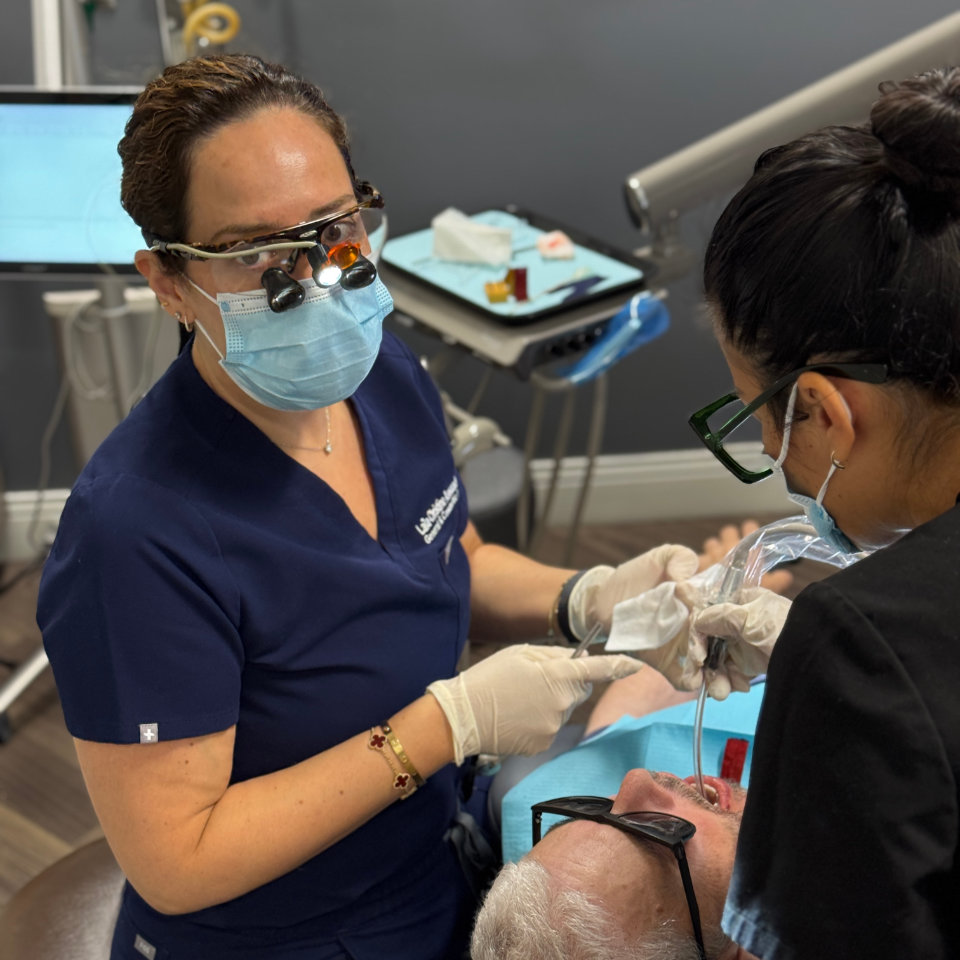
At Polished Smiles in Torrance, Dr. Laila Assaad brings the clinical depth to implant restorative dentistry that her training specifically prepared her for. She earned her Doctor of Dental Medicine from the University of Montreal and completed an advanced General Practice Residency at New York Presbyterian Hospital of Columbia and Cornell University — one of the most rigorous post-graduate dental programs in the country, with specific training in implantology, complex treatment planning, and oral pathology. With more than 15 years of clinical experience and in-house CEREC technology for same-day restorations, our practice handles the full restorative phase of implant treatment with precision and efficiency.
Why Implants Outperform the Alternatives
The comparison between dental implants and the alternatives — bridges and removable partial dentures — comes down to a single fundamental difference: whether the replacement addresses the full consequence of tooth loss or only the visible component.
A traditional dental bridge replaces the visible crown by anchoring a restoration to the adjacent teeth on either side. Those adjacent teeth must be permanently shaped down to accommodate the supporting crowns, sacrificing healthy tooth structure that would otherwise need no treatment. The bridge restores appearance and some function, but the bone beneath the gap continues to resorb because there is no root to signal maintenance. Over time, the ridge beneath the bridge shrinks, and the bridge itself typically requires replacement after 10 to 15 years.
A removable partial denture replaces multiple missing teeth with a prosthetic that is taken out for cleaning and overnight. It provides some function but relies on clasps and the remaining teeth for retention, with the gum tissue beneath absorbing forces it was not designed to bear. Fit tends to degrade over time as the underlying bone continues to change.
An implant does none of this. It requires no modification of adjacent teeth. It stimulates the bone it sits in, maintaining the ridge that the surrounding dentition depends on. It is cleaned exactly like a natural tooth and does not require removal, adhesive, or periodic refitting. Published success rates for dental implants at 10 years consistently exceed 95%, making them the most durable single-tooth replacement available.
When a Bone Graft Is Part of the Plan
One of the most common sources of hesitation we encounter in implant consultations is the discovery that bone grafting may be necessary before implant placement can proceed. For patients who have been missing a tooth for an extended period, the bone resorption that has been accumulating may mean the site does not have adequate volume to support an implant without first rebuilding the ridge.
Bone grafting is a planned part of the treatment pathway in these situations — not a complication. The graft material, placed at the proposed implant site, allows the bone to rebuild over several months before the implant is placed. The result is an implant that integrates into healthy, adequately dense bone and has the structural foundation for long-term success.
For patients who have recently lost a tooth and are considering an implant, socket preservation — placing graft material at the time of extraction — prevents the resorption that would otherwise begin immediately, preserving the ridge volume needed for future implant placement and often shortening the overall treatment timeline.
The CEREC Advantage in Implant Restoration
Once the implant has integrated, the final restoration — the crown placed on the implant — is where precision matters enormously. A crown that doesn’t fit the adjacent bite correctly, contacts the opposing teeth at the wrong angle, or doesn’t match the surrounding teeth aesthetically leaves the patient with a functional and cosmetic result that falls short of what an implant should deliver.
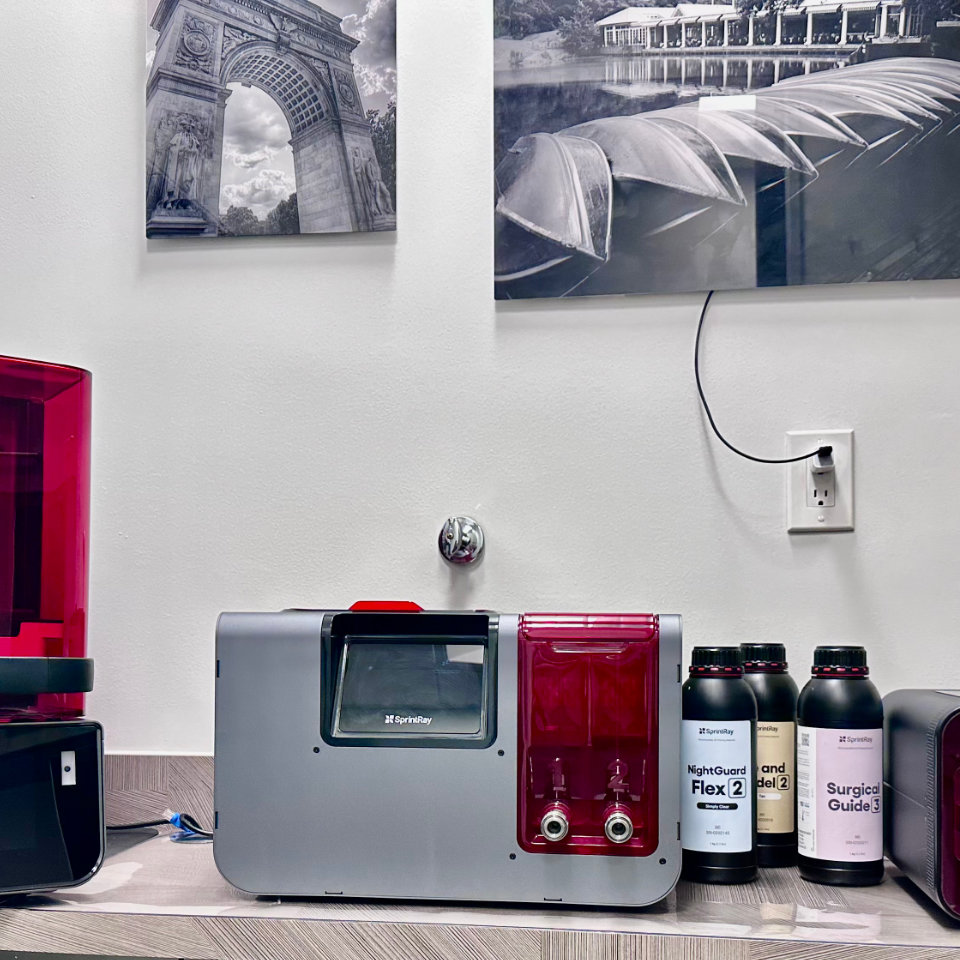
At Polished Smiles, Dr. Assaad uses CEREC technology for in-house crown design and fabrication. CEREC’s digital workflow captures a three-dimensional scan of the implant site and surrounding dentition, and the crown is designed using CAD/CAM software and milled from ceramic directly in our office. This eliminates the weeks of waiting associated with traditional lab-fabricated crowns and allows for precise control of fit, contacts, and shade — with any needed adjustments made and confirmed before the patient leaves the chair.
Starting the Process This Spring
The implant timeline — from initial evaluation through final crown placement — typically spans six to nine months for a straightforward single-tooth case. May is a practical starting point for patients who want the process completed before the holiday season, or who want to take advantage of remaining dental insurance benefits before the year resets.
The first step is a consultation with Dr. Assaad, which includes CBCT or digital imaging to assess the bone at the proposed implant site and a clear conversation about what the treatment plan involves, what the timeline looks like, and what the cost and financing options are. There is no commitment required at the consultation — just a clear picture of what is possible.
Schedule Your Implant Consultation
We invite you to call us at 424-401-9424 to schedule your consultation at our Torrance office. We serve patients throughout Torrance, Redondo Beach, Palos Verdes, and the surrounding South Bay communities.
Medically reviewed by Laila-Christine Assaad, D.M.D. on
Posted on behalf of
23451 Madison Street Suite 120
Torrance, CA 90505
Phone: 424-401-9424
Email: [email protected]
Opening Hours
Monday - Friday
7:30 am - 3:30 pm